Outside
Inside
Chicks
Goats
Hen Bios
Hen Blog
More
Hen Bios

HenBlog

All about the goings-on at Little Pond Farm


I've kept a flock of hens for over a dozen years and in that time my hens have gotten into all sorts of predicaments. If you are looking for advice about a specific issue, check the FAQs. Or you just might find a blog entry about it by searching the archives. If you still have a question, email me. However, I'm new to goats, so go to someone more experienced if you're looking for caprine advice!


Choosing Chicken Breeds Right For You

January 25, 2012

It’s that time of year. Chicken catalogs appear in the mailbox. Experienced poultry keepers think about expanding their flocks. People who have never kept hens plan their coops, ready their brooders and dream of chicks. Everyone is mulling over what breeds to get.

Picking the chicken breeds to order can be overwhelming. Catalogs are a veritable, well, catalog of choices. It’s like opening a box of chocolates. Such a selection! You know you don’t want the coconut bonbon, but what about all of the others? You can’t (you shouldn’t) eat all of them, but they all look delicious. It’s the same when faced with a crate of chicks at the feed store, or perusing the pages of a hatchery catalog. Decisions must be made and limits must be set. But how? To use another analogy, it’s like going to an auction. You’d better decide ahead of time how much you’re willing to spend before you’re actually face-to-face with temptation. Use restraint. Don’t go over.

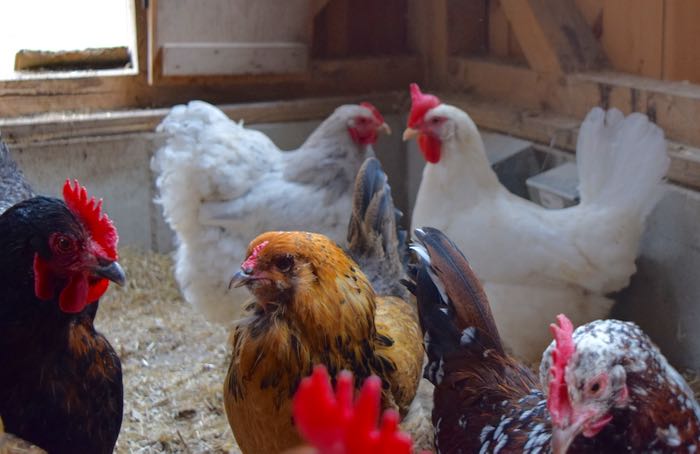
Few people with a small backyard flock decide on breeds based purely on practicality. Some chose birds based solely on appearance. We fall in love with feather color, fluffy bottoms and silly head plumage. We like big birds, or very small ones. We like floppy combs, or pea combs, or no combs. Some make their decision based on egg color. They want blue eggs, or all white, or brown, or chocolate.

Certainly you should take looks into account. Right now if someone offered me two grey hens (any breed, as long as they are a pretty slate color) I would welcome them into my flock (even though my flock is healthy and well-established and I shouldn’t have any more chickens.) But, there are other things that you should think about, and I’ll list them here for you.

1. Do not order too many chicks. They grow up. They get big. They need way more space than most of the prefab coop advertisements specify. Plan on a minimum of 4 square feet of interior space per chicken – and that doesn’t include the nesting boxes! Plan on a foot of roost per bird. Make sure there’s another 8 square feet of outdoor space per chicken.

2. Purchase a variety of breeds. First of all, it’s easier to tell your hens apart if they have different feather colors. The differences in personality will be more obvious to you (their individuality is part of the fun.) Besides, everyone loves having multi-hued eggs in their basket, and even if you select all brown-egg laying hens, there will be variation in darkness and mottling from breed to breed.

3. Take breed personality into account. Some chickens are more assertive than others. Some are better foragers. Some are docile. Some like to interact with people, some are aloof. Just like there are advocates of different dog breeds (Dachshund or Irish Wolfhound? Border Collie or Pug?) so, too, will people be opinionated about chicken breeds. I’ll give you my prejudiced view. I’m sure to get some disagreement! In my experience the hens that are avid, active free-rangers are also the ones most likely to pick on subordinate hens. Rhode Island Reds, any of the leghorn/RIR hybrids, the Wyandottes and the Barred Rocks, all are greedy about food and not willing to share their space. They’re fine together, but woe to the meeker breeds mixed with them. More mild-mannered hens are the Orpingtons, the Barnevelders, Welsummers, and Cochins. If you want hens that are eager to interact with you, go for the Speckled Sussex and the Leghorns. Do you want good layers that are decent birds, but not friendly? Try Australorps and Americaunas. If you want chickens with no chicken sense whatsoever, get Polish.

4. Take into account your climate, facilities and management style. Pearl is my feather-footed, heavy-coated Cochin. She’s beautiful (grey!) and sweet as can be, but I would never get another Cochin. In the summer here it gets hot and humid and she overheats. She goes broody and suffers even more from the heat. In the winter the feathers on her feet become crusted with frozen slush and snow. In the spring her feet are dirty and I know which eggs are hers from the mud on them. I end up having to trim the feathers on her feet. She gets manure stuck in her fluffy feathers and so she needs baths. She’s totally impractical and high maintenance. Another poultry-keeper might not mind, but that’s not my style. It’s also why I no longer keep silkies. I’ve had only two and I adored both of them for their sweet temperaments and adorableness, but they both died young and I take responsibility. When a silkie gets cold and damp they get sick – something I didn’t realize as a new henkeeper. Where I live it is often cold and damp. If I were to keep silkies, I’d have separate, indoor facilities for them. For some, that extra care is worth it. I prefer sturdy hens that don’t need coddling.

This post probably hasn’t helped you at all. Not only have I been none to specific, but I’ve left out numerous breeds. That box of chocolates is still there, open, with too many temptations. But, the truth is, like a good box of confections, they’re all good. Even if one isn’t ideal, the mix is delicious. I once had a blue-egg layer named Perrie. She wasn’t friendly, but she laid gorgeous eggs, and that was enough. Buffy is a calm Orpington. She was never a good layer, but she’s a content face in the flock. That’s enough, too. All of the parts make the whole. So, when selecting the right hens for you, look at the complete picture. Each hen doesn’t have to be perfect, but the mix should form a satisfying whole.

I am not placing a chick order this year. My Gems are laying, and my retired hens don’t need the upheaval of new birds in their midst. I’m missing the excuse to pore over the catalogs. So, if you’re placing an order, share you thoughts with me. Getting chicks? What’s the picture that you see?

Snow Day

January 23, 2012

Snow fell all day on Saturday. As it came down, it seemed like a big storm, but the snow was light and dry and by nightfall there were only a few inches on the ground. Still, it’s enough so that it finally looks like winter. Sunday morning dawned cloudy but bright; the shadows blue.

It was 12 º F when I did my chores, but without a wind, and with my warm barn coat and gloves on, it felt good to be outside. However, the hens did not want to leave their coops.

The cold wasn’t bothering them at all. What kept them in was the snow – chickens don’t like walking in it. I shoveled out a space, but they still looked dubiously out their doors.

I mucked out the goat stall and instead of dumping the used bedding into a compost pile, I spread it at the base of the pop-door ramps. Everyone happily stepped out into the sunshine.

Candy likes snuffling around in the goats’ discarded hay, but she likes snow even more. She hopped over to the side of the pen where leaves have blown and piled against the fence. Candy pulled out the leaves,

and then munched.

At least Candy approves that I didn’t do a thorough fall yard cleanup!

So, despite  the well-below freezing temperatures and snow on the ground everyone is comfortable and content. Even the goats don’t mind this airy snow. It reflects light onto them, ideal for sleepy sunbathing.

The Girls Come Running

January 20, 2012

My hens come when called. Even if it is a beautiful day. Even if they’ve been stuck in their dirt-floored, boring pen for days and are finally out in the woods, which, if you are a hen, is the absolutely best place on earth, they still come. They flap, they run, they stick their necks out and hightail it.

Well, everyone except Agatha. But, when she finally looks up and realizes that her friends are no longer around, and when she finally hears me calling, she does come. Sweetly and calmly, and is happy to be carried back home.

Feathers, Ears and Eggs

January 19, 2012

Two years ago I noticed that several mainstream magazines, including Gourmet, published little factoids stating that brown hens lay brown eggs and that white hens lay white eggs. Did they not know, I wondered, that there are hens with feathers like this?

And this?

I contacted Gourmet Magazine to find out where they got their information. I was not surprised that it came from an egg lobbying group. If you go to the United Egg Producer’s web site it states: The breed of the chicken determines shell color of an egg—the white hens lay white eggs and the brown hens lay brown eggs. Which is true, I suppose at commercial egg facilities (I refuse to call them “farms”) where there are only two types of chickens – white and brown.

However, it is not true for this beautiful La Fleche hen. (She looks sweet even with that devil-horn comb!) Her feathers are black and yet she lays white eggs.

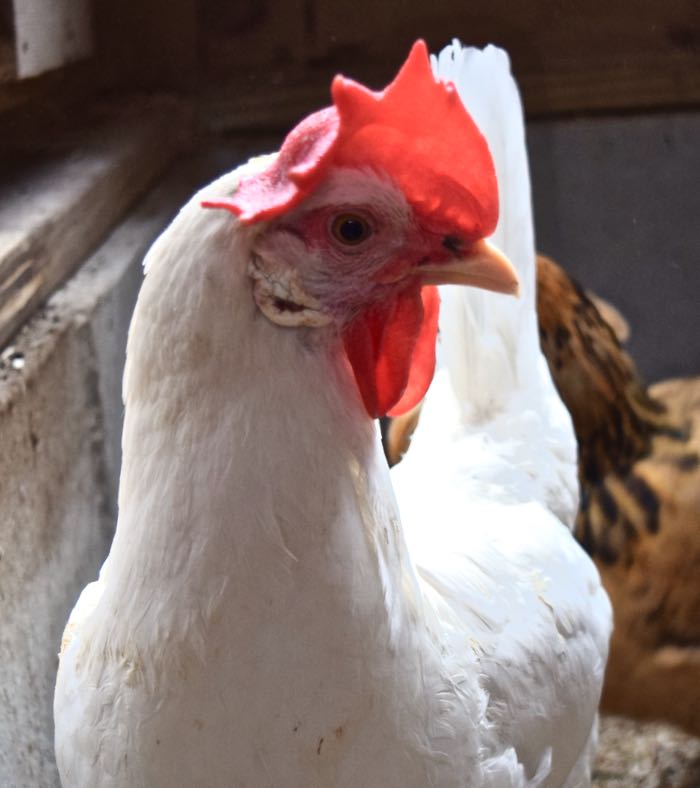
How do I know she lays white eggs? That fleshy patch of skin below her eye is her ear lobe. It’s white, so her eggs will be white.

This Wyandotte’s ear lobes are dark-skinned and so she’ll lay brown eggs.

Blue and green egg layers also have dark ear lobes – which can be hard to see under an Araucana’s muff.

The misinformation that the United Egg Producers send out irks me. It’s a subtle and effective propaganda used to get the consumer to see chickens as boring, uniform manufacturers of eggs. It further separates them from the animals that make their food.

Which is a shame, since it’s a colorful and wonderful world out there if you know where to look.


Cheesy Egg Puff with Greens Hash

January 17, 2012

The Gems are laying anywhere from four to seven eggs a day. It’s time to make a recipe that uses up ten of them.

The beauty of cooking with fresh eggs from my own hens is that I don’t have to do much to have something to eat that looks and tastes special. These fresh eggs have an innately rich flavor, and it doesn’t take more than a little whisking to create an airy texture. In fact, they’re so good as is that I resent any recipe that makes a fuss over them. Still, there are times when I want something more interesting than scrambled eggs. Cheesy Egg Puff with Greens Hash is substantial enough for dinner, but suits my egg-cooking philosophy of don’t mess with a good thing.

Cheesy Egg Puff with Greens Hash

10 eggs
1 cup milk (whole, skim or a combination)
1 1/2 teaspoons good salt (sea salt or kosher)
1/4 teaspoon freshly ground black pepper
5 ounces (about 1 1/2 cups) grated cheese of choice

2 tablespoons olive oil
1 shallot, sliced (or red onion, 1/4 cup)
2 slices bacon, cooked and diced
1 potato (about a half-pound) diced
1 1/2 cups greens, chopped

1. Preheat the oven to 450º F. Coat a 2-quart shallow casserole with olive oil spray (or butter.)
2. Whisk the eggs, milk, salt and pepper together until well-mixed. Stir in the cheese. Pour into the casserole.
3. Bake for about 20 minutes until set – the top will brown slightly and the center will spring back to the touch but not jiggle.
4. While the eggs are baking, saute the shallot in the olive oil. Add the potatoes and cook until tender.
5. Add the bacon and greens to the pan. Wilt. Continue to cook over a low heat until the eggs are ready.
6. Top the casserole with the greens hash and serve.

6 servings

A note on the ingredients:

Bacon- Pigs are brilliant, interesting animals. They deserve a good life. I only buy bacon from farmers that I know, who keep the pigs on pasture, and who use a small, local slaughterhouse. Not only do I feel better about the meat that I eat, but it is so much more flavorful and healthful than the pork at the supermarket. It’s expensive, but worth it. A little goes a long way, I’m supporting local farmers, and I’m doing right by the animals.

The greens-

I used green Swiss Chard in this recipe. I like the texture of the greens without the crunchy stems, so fed them to two very appreciative goats and one rabbit. Other greens, like kale and spinach are perfectly acceptable here, though I think that chard is the mildest in flavor. Do make sure that you wash the greens well. After washing, twirl in a salad spinner to remove excess water. That one step will improve the hash immeasurably.

Enjoy!


I'd love to hear from you! Email Terry at terry@terrygolson.com


  Copyright © 2005-2011 Terry Golson. All rights reserved.__|__Many of the photos on this site are by photographer Ben Fink__|__Website design by Edge Design